Setting Up a License Store: Selling Keys Directly to Customers
Everything so far in this series assumed you already had a license key to hand to a customer. This post covers the other end: getting a customer to pay you and receive a working key, without you writing a checkout flow or an email-delivery system yourself. That's what the License Store is for.
What the Store Actually Is
It's a real, hosted storefront — your own product pages, your own pricing (one-time, monthly, annual, or a free trial), connected to your own Stripe account. PermitCore doesn't sit in the payment path as a reseller; Stripe pays you directly, and PermitCore's job is turning a completed checkout into a real, encrypted license key delivered to the buyer.
Step 1: Add a Store Product
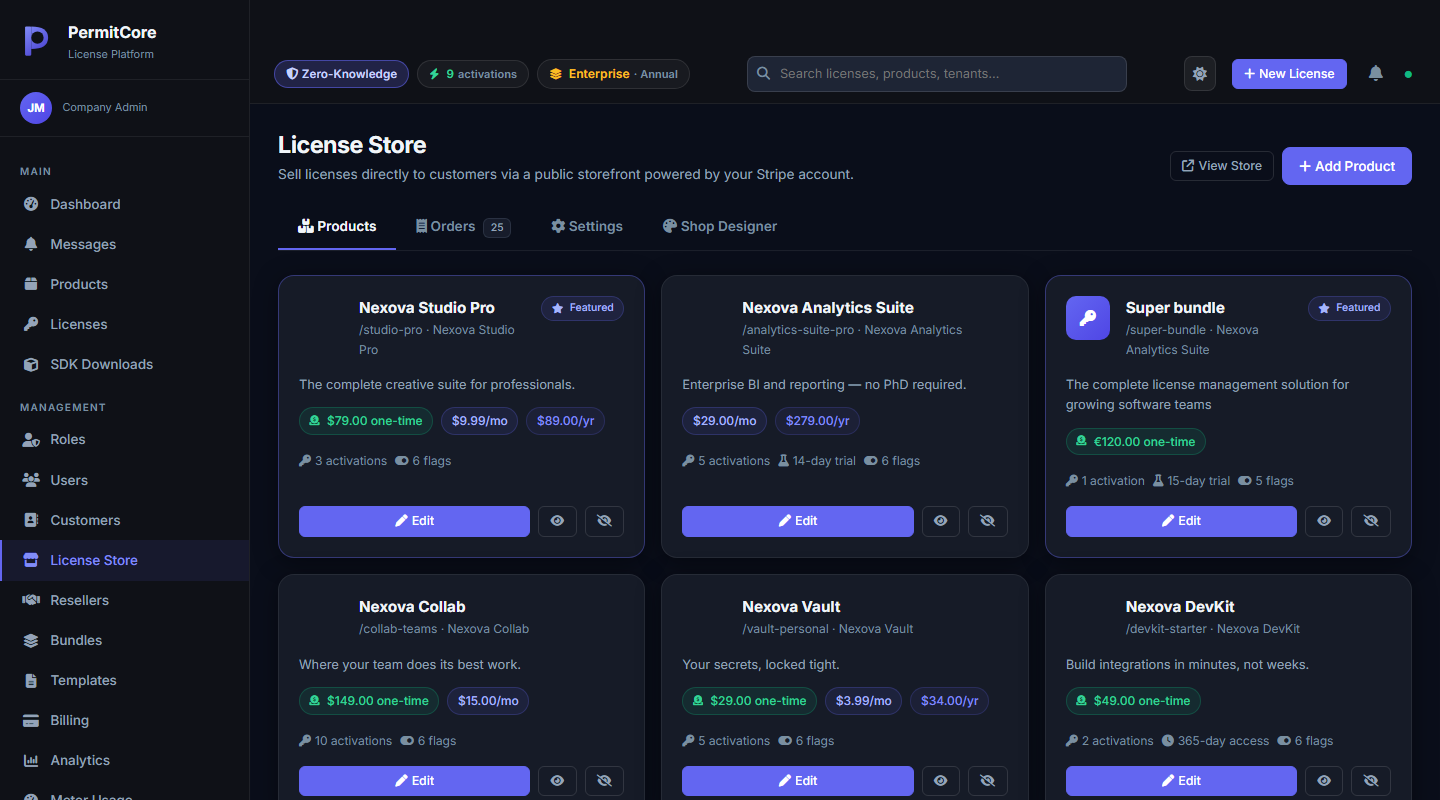
Go to License Store → Products → Add Product. A store product wraps one of your existing PermitCore products with everything a storefront needs: a public description, one or more prices, a trial period if you want one, and which features/flags a purchase should grant.
Each card shows its live pricing, activation limit, and trial length at a glance.
Step 2: Connect Stripe
Under Settings, paste in your own Stripe publishable and secret keys. This is a bring-your-own-Stripe model deliberately — your customers' payment details go straight to Stripe, PermitCore never touches a card number, and the money lands in your account with no extra hop.
Step 3: See What Customers See
Your storefront is live at a URL scoped to your own tenant slug — a real product page with pricing tiers, ready for a customer to buy from:
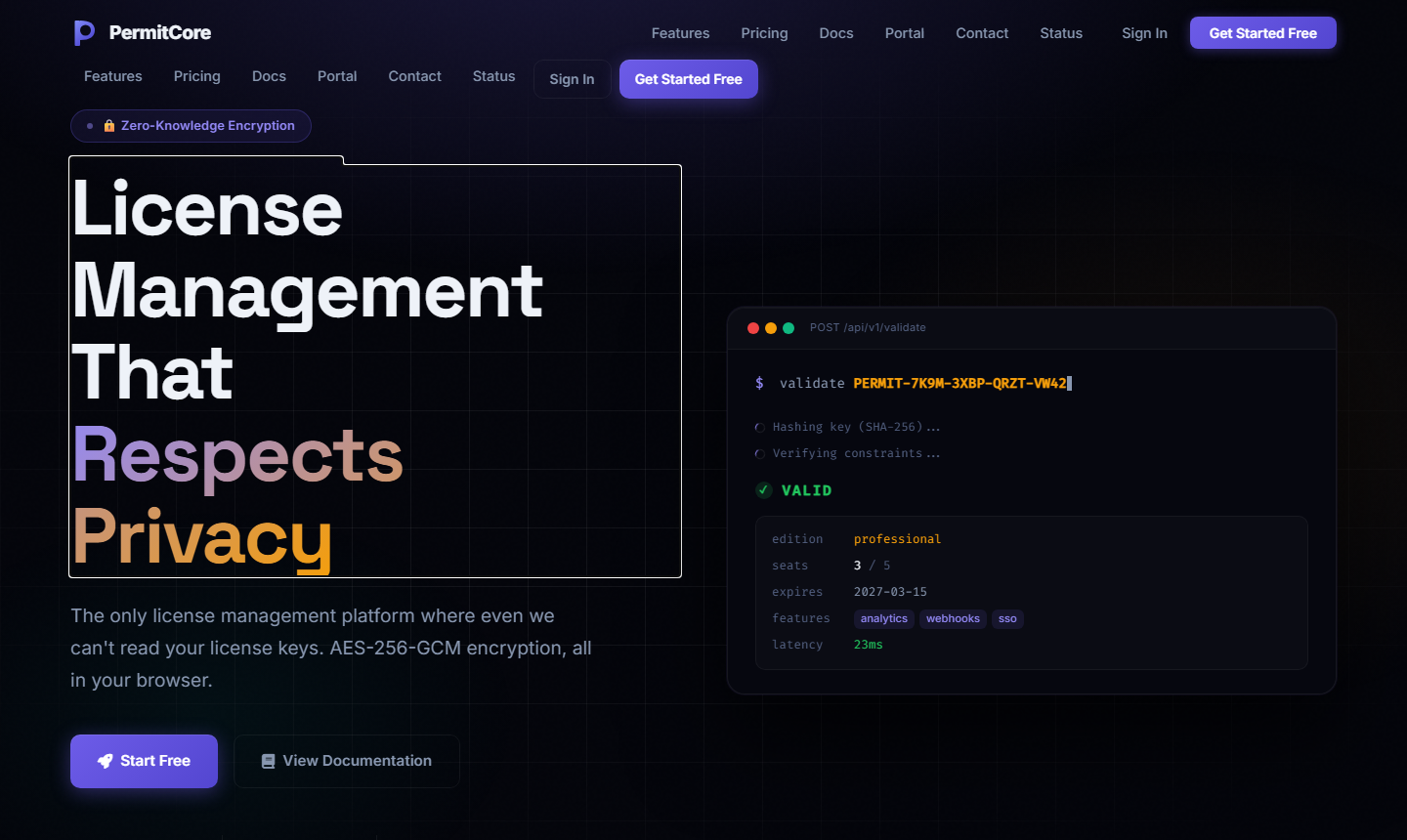
This is what a customer sees when they land on your store — no PermitCore branding required.
What Happens After a Purchase
The moment Stripe confirms payment, PermitCore's webhook handler generates a real license key, encrypts it the same way an admin-created one is encrypted, and emails it to the buyer — or, if they register a store account, links it directly to that account so they can find it again later without digging through old emails.
What's Next
That's the core loop this series set out to cover: create a product, generate or sell a key, activate it on a real device, and keep working offline when the network doesn't. From here, the full documentation covers everything else — webhooks, resellers, metered billing, and the complete API reference.